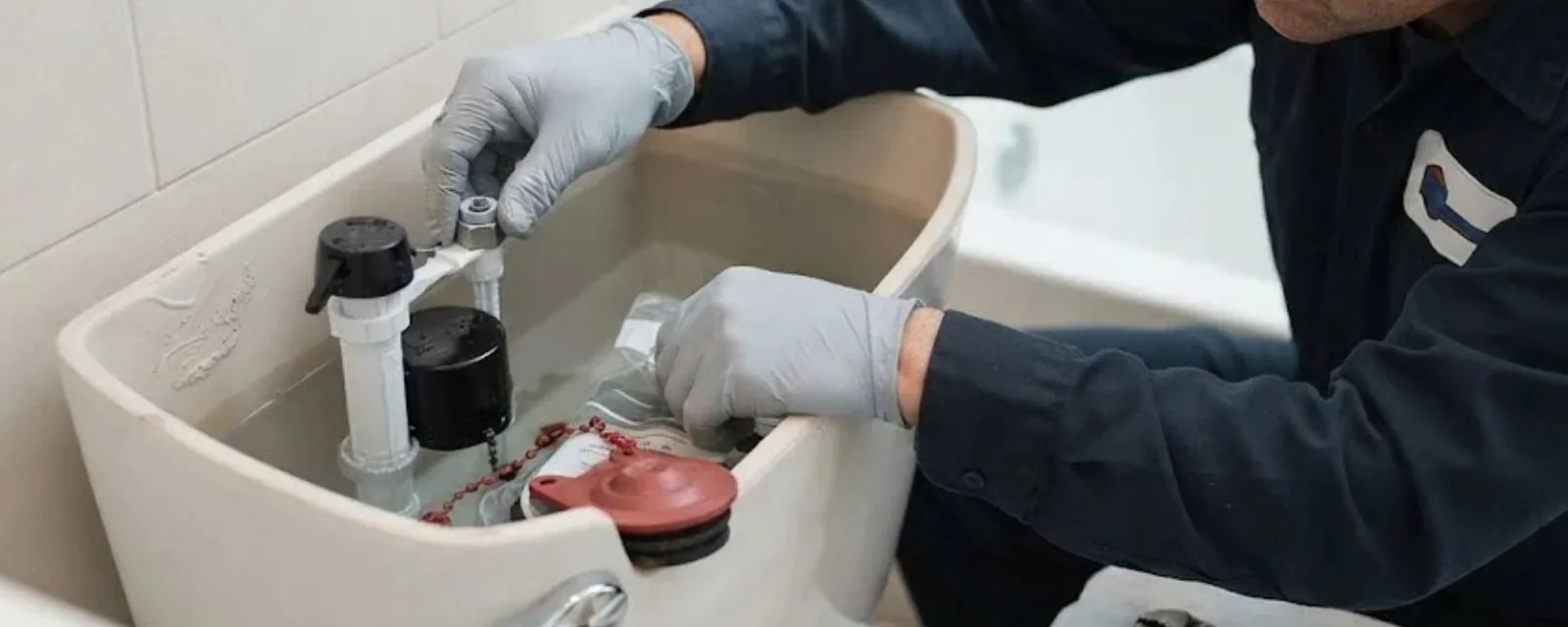
If the water is rising, lift the tank lid and push the flapper down, or turn the shutoff valve behind the toilet clockwise until it stops. That stops the flow and buys you time.
If water is coming from the base of the toilet, a failed wax ring or a cracked bowl is likely, and the toilet should not be used until it is fixed. Call and we will schedule a plumber.
Most toilet problems fall into four groups: clogs, leaks, running water and wobbling. Each has a different cause, and the right fix is usually small. We carry common parts so many repairs finish in one visit, and we tell you when a toilet is past saving and replacement is cheaper.
Clogged and overflowing toilets
A plunger solves most simple clogs. If the water will not go down, or if other fixtures gurgle, the blockage is deeper, and plunging harder only risks an overflow. A toilet auger reaches into the trap and breaks up or retrieves the obstruction. When more than one fixture is affected, the problem is in the drain line and our drain cleaning work takes over.
First steps for an overflow
- Turn the shutoff valve behind the toilet clockwise to stop the supply.
- Lift the tank lid and lower the flapper if water continues to flow.
- Put towels around the base and stay out of standing water near outlets.
- Do not flush again, and do not use chemical cleaners.
Leaks at the base
Water at the base can come from a worn wax ring, loose closet bolts, a cracked porcelain bowl or a loose supply line. Left alone, a leak under the toilet rots the subfloor, which is a much larger repair than a ring. The plumber lifts the toilet, checks the flange for cracks and corrosion, replaces the ring and resets the bowl level and secure.
A damaged flange is common in older homes and in rooms where flooring was replaced without adjusting the flange height. We repair or replace the flange so the toilet seats firmly. A wobbly toilet that keeps loosening is often a flange problem, not a loose bolt.
| Symptom | Likely cause | Typical fix |
|---|---|---|
| Water at the base | Failed wax ring or cracked bowl | Replace ring, check flange, or replace toilet |
| Constantly running | Worn flapper or fill valve | Replace flapper or fill valve |
| Weak flush | Clogged rim jets or partial blockage | Clear jets, auger the trap |
| Rocking toilet | Loose bolts or damaged flange | Reset toilet, repair flange |
| Tank sweating or dripping | Condensation or loose tank bolts | Replace bolts and washers, insulate |
Toilet overflowing or leaking?
Call and a plumber will fix it or replace it, with the price set before work starts.
Running toilets
A toilet that runs constantly can waste hundreds of gallons a day and shows up on your water bill. The cause is usually a worn flapper that does not seal, a fill valve that never shuts off or a chain that is too short or tangled. These are cheap parts, and replacing them takes under an hour.
If the problem returns quickly, the plumber checks water pressure and the valve seat.
When to replace instead of repair
Replacement makes sense when the bowl is cracked, the porcelain is stained through, parts are no longer available, or the toilet is old and inefficient. A modern toilet uses much less water per flush and often flushes better. The plumber shows options, removes the old toilet, sets the new one on a fresh ring and checks for leaks.
If you are adding or moving a bathroom, see our plumbing installation page.
Toilet issues in Happy Valley homes
Many Happy Valley homes are under 25 years old, so toilets are often modern but builder-grade, and parts like fill valves and flappers wear out on schedule. Soft water from Sunrise Water Authority is gentle on rubber parts compared with hard water, but chlorine in the supply still degrades flappers over time. Remodels and flooring changes can leave flanges too low or too high, which causes leaks and rocking.
Sewer service is managed by Water Environment Services. If a toilet backs up and several fixtures are affected, it is probably a main line issue, which we treat under sewer line cleaning.
Pricing
A flapper or fill valve repair costs much less than a wax ring reset, and replacing a toilet costs more. You hear the price before work begins. If the plumber finds a damaged flange or subfloor, you are told before anything is done.
Toilet repair questions
Yes. Stop the water at the shutoff valve behind the toilet and call. Overflow can damage floors and ceilings below.
A worn flapper, a faulty fill valve or a misadjusted chain are the usual causes. Replacing the part ends the waste.
Usually a failed wax ring or loose bolts, sometimes a cracked bowl. The toilet needs to be lifted and checked.
Often yes when the schedule allows. Tell us whether you have a standard or comfort-height model and we can suggest options.
We advise against it. Chemicals rarely clear the problem, and they can damage the pipe or injure someone who works on it afterward.
It could be a weak flush, a partial blockage in the drain or something being flushed that should not be. The plumber tests flow and recommends a fix.