
If a single sink is slow, you probably have a local clog. If the toilet gurgles when the washer drains, or water appears in a floor drain, the blockage may be in the main line and the situation can turn messy fast. Stop running water, and call so we can schedule a clearing visit before the backup reaches the lowest fixture in the house.
Chemical openers rarely fix what is really a grease plug or a tangle of hair, and they can sit in the pipe and burn a plumber's hands later. Please skip them while you wait. A plunger on a single sink is fine, and so is a bucket under the trap, but anything more is best left to a cable or jet.
Start here: how far does the problem reach?
Run through the house and notice which fixtures are affected. One slow fixture points to its own branch line. Two or three fixtures on the same floor point to a branch that serves them together. Every drain acting up, especially the lowest tub or floor drain, points to the main sewer line, and our plumber will handle it with sewer line cleaning instead of a small sink cable.
Before the plumber arrives
- Stop using water in the affected area, and do not flush a toilet that is rising.
- Pull the stopper or strainer and remove any visible hair or debris.
- Lay towels around the fixture and keep electrical cords away from the floor.
- Note when it started and which fixtures are slow, since this speeds up the diagnosis.
How we clear a stubborn drain
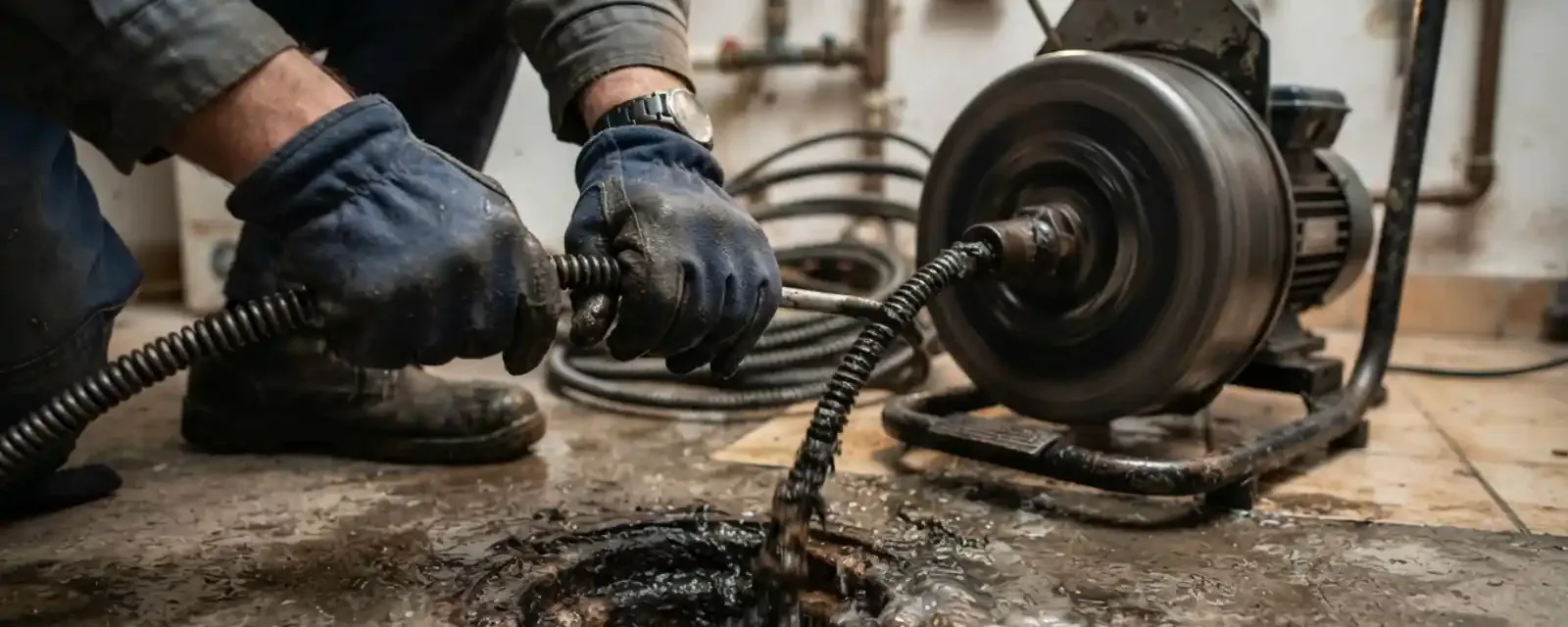
For most household clogs, the plumber feeds a motorized cable into the line, breaks through the blockage and retrieves what it can. Cables clear a path, though they sometimes leave a narrow channel in grease. Where the line is coated, hydro jetting scours the pipe walls with high-pressure water, which is why it suits kitchen lines and repeat clogs.
When a drain keeps coming back, guessing stops being useful. A camera shows whether the cause is a sagging section, a root, a joint that has shifted or simply years of buildup. That information changes the repair, and it is the reason a quick clear and a durable fix are different jobs.
| What you see | Likely cause | Typical approach |
|---|---|---|
| One slow kitchen sink | Grease and food film | Cable, then jetting if it returns |
| Slow tub or shower | Hair and soap in the trap or branch | Cable the branch line |
| Toilet and tub gurgle together | Partial main line blockage | Main line cable, camera if repeat |
| Floor drain bubbling | Main line obstruction or backwater | Immediate main line clearing |
Drain backing up right now?
Call and a plumber will be scheduled to clear the line and explain what caused it.
What usually clogs drains around Happy Valley
Many Happy Valley homes are under 25 years old, with PVC drain lines that should flow well, so a clog in a newer house often comes from what went down the pipe rather than from the pipe itself. Kitchen grease, wipes labeled flushable and construction debris left behind after a remodel are common culprits.
In older neighboring areas such as Milwaukie and Oregon City, root growth and aging pipe join the list.
Water Environment Services handles the public sewer system in this part of Clackamas County. The pipe between your house and the public main is generally yours to maintain, so a backup that repeats is worth investigating with a camera before the next one floods the basement.
What drives the price
You get a clear price before work begins. A simple sink clog costs less than a main line clearing, and a job that needs a camera, access through a cleanout or a long cable run costs more. Heavy buildup that needs jetting is priced separately from a quick cable pass. The plumber tells you which method fits and why before starting.
Keeping drains clear afterward
Use a hair catcher in showers and tubs, wipe greasy pans before washing, and run hot water for a short time after rinsing a sink. Only toilet paper belongs in a toilet. If the kitchen line has a long history of clogs, a scheduled jetting can be cheaper than repeated emergency calls, and our sewer inspection can show whether something in the line needs repair.
What to do and what not to do with a clog
Never mix drain cleaners, and never run a power tool in standing water. If a cleaner has splashed on skin or eyes, rinse with running water and call Poison Control at 1-800-222-1222.
Drain work and venting are governed by the Oregon Plumbing Specialty Code (OPSC), based on the Uniform Plumbing Code (UPC). A repair that changes pipe layout may need a permit, so ask the Happy Valley building department.
Drain cleaning questions
A single slow sink can wait for a visit, but water rising in a tub, a gurgling toilet or a floor drain backing up is urgent. Stop using water and call so the line can be cleared before it overflows.
We recommend against it. Chemical cleaners rarely clear grease or hair plugs and can sit in the pipe, which is unsafe for the next person who works on it.
It depends on the clog. Cables handle most single-fixture blockages, and jetting is better for grease, scale and repeat clogs. The plumber will explain the choice before starting.
Repeat clogs usually mean something in the pipe, such as buildup, a sag, roots or a bad joint. A camera inspection shows the cause so you are not paying for the same clear every few months.
Yes. We clear main lines from cleanouts and through roof or fixture access when needed, and can follow with a camera check to see what caused the blockage.
Yes. Our phone line is open 24 hours a day, 7 days a week, and we schedule emergency drain work whenever it happens.