
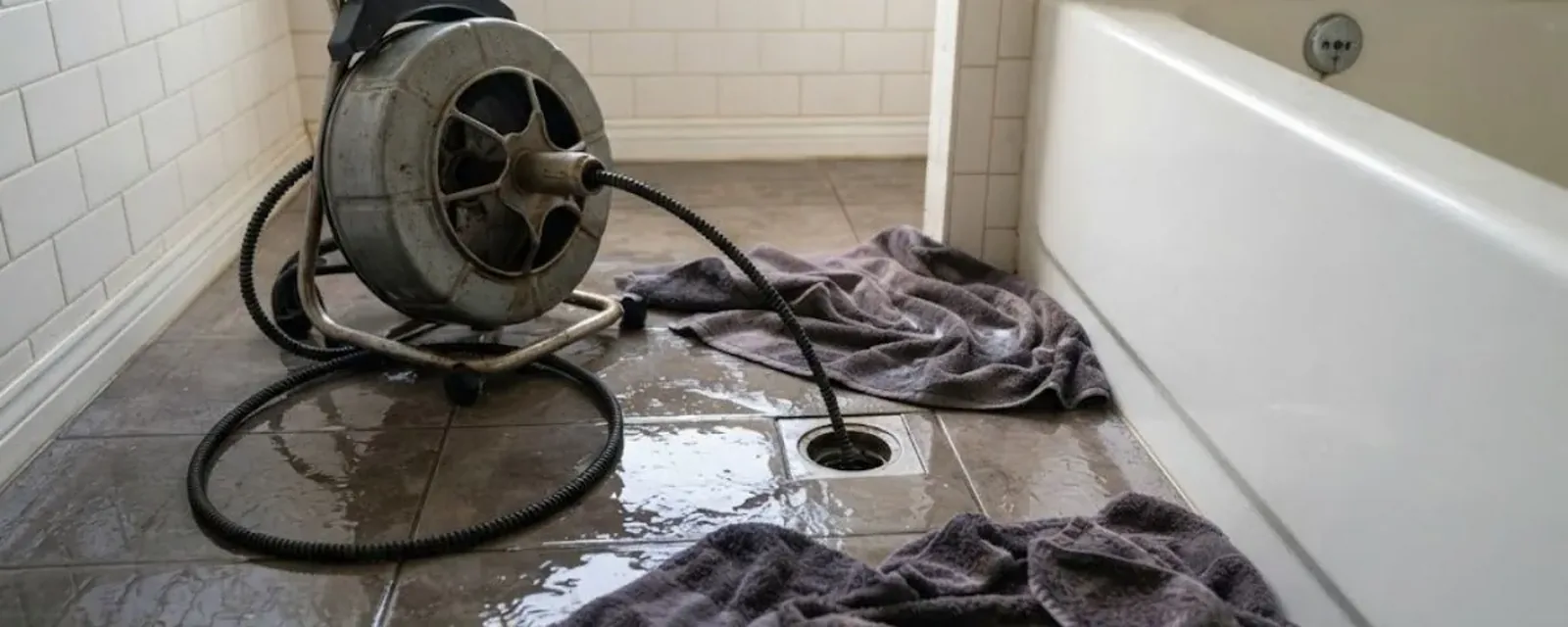
The main sewer line carries everything out of the house, so a blockage there affects every fixture. The classic signs are a toilet that gurgles when a sink drains, water backing up into the tub when the washer runs, and a floor drain that bubbles or overflows. If you see these, stop using water and call. The lowest fixture in the house will overflow first.
Our plumber clears the line from a cleanout or another access point, then looks at what came out and what the camera shows. That tells you whether the blockage was a one-time event or a sign of damage. A one-time clog gets cleared and you are done. Repeat blockage leads to a camera check and, if needed, sewer line repair.
How to tell a main line clog from a fixture clog
A fixture clog stays local, and plunging or a small cable usually fixes it. A main line clog hits the lowest drains first and affects more than one fixture. If you are unsure, run water in an upstairs sink and watch the tub. If the tub gurgles or rises, the main line is blocked. For single-fixture trouble, see our drain cleaning page.
Before we arrive
- Find your cleanout, a capped pipe near the foundation, in the garage or in a crawlspace.
- Move items away from the lowest drains in case water rises further.
- Stop using water throughout the home until the line is clear.
- Keep children and pets away from any area with sewage.
How we clear a main line
The plumber opens the cleanout and feeds in a heavy-duty cable with a cutting head, sized for the pipe. The head cuts through roots, grease and debris, and water flow tells us when the line is open. Where the line is coated with buildup, hydro jetting follows to scour the walls. A camera pass confirms the line is clear and reveals any damage that caused the blockage.
Main line backing up?
Call now and a plumber will clear the line and tell you what is behind it before you pay for repairs.
Common causes of main line blockages
Tree roots are the leading cause in older laterals, entering through joints and growing until they snag paper and waste. Grease builds up in kitchen lines and combines with wipes and hygiene products. Sagging pipe holds standing water where solids settle, and construction debris sometimes sits in new lines. Each cause has a different fix, and the camera tells us which one you have.
| Cause | Warning sign | Long-term fix |
|---|---|---|
| Roots | Repeat backups over months | Cut roots, then line or replace the joint |
| Grease and wipes | Slow kitchen drain, then main backup | Habit change, scheduled jetting |
| Sag or belly | Backups after heavy use | Repair or replace the section |
| Construction debris | Backup soon after a build or remodel | Clear, camera confirm |
What this looks like in Happy Valley
Newer homes in Happy Valley have PVC laterals that should flow cleanly, so a main line blockage in a young house often traces to flushed wipes, grease or debris from construction. Neighboring Milwaukie and Oregon City have older housing where roots are more common.
The public sewer is managed by Water Environment Services, and a quick check helps establish whether the blockage is on your lateral or on the public main.
If the blockage is in the public main, neighbors will often be affected too, and the agency is the right call. Our plumber can usually tell from the camera and the cleanout flow which one you have.
Pricing
You get a clear price before work starts. A main line clearing with easy cleanout access costs less than a long run that needs a larger machine or a camera. Heavy root intrusion or grease buildup that requires jetting is priced separately and explained first.
After the visit, avoid flushing wipes, pour no grease down drains and consider a sewer inspection if the line has backed up before.
Safety and code notes
Sewage carries bacteria, so keep children and pets away from backups and wash well after contact. Cleanouts and line sizing follow the Oregon Plumbing Specialty Code (OPSC), based on the Uniform Plumbing Code (UPC). If backups come from the public main, Water Environment Services is the agency to call.
Sewer line cleaning questions
Yes. Sewage can spread quickly, and it creates a health hazard. Stop using water and call. We answer 24 hours a day.
Multiple fixtures are affected, especially the lowest ones, and toilets gurgle when other fixtures drain. A floor drain bubbling is a strong sign.
Not if the line is damaged or full of roots. A camera inspection tells you whether a repair is needed.
Small hand augers cannot handle most main lines, and a cable that jams or breaks in the pipe makes the job harder. A professional machine is the safer choice.
Generally the homeowner for the lateral to the public connection, and Water Environment Services for the public main. Ask them about your exact property.
Keep grease and wipes out of the drain, flush only toilet paper and schedule a camera check if backups repeat.