
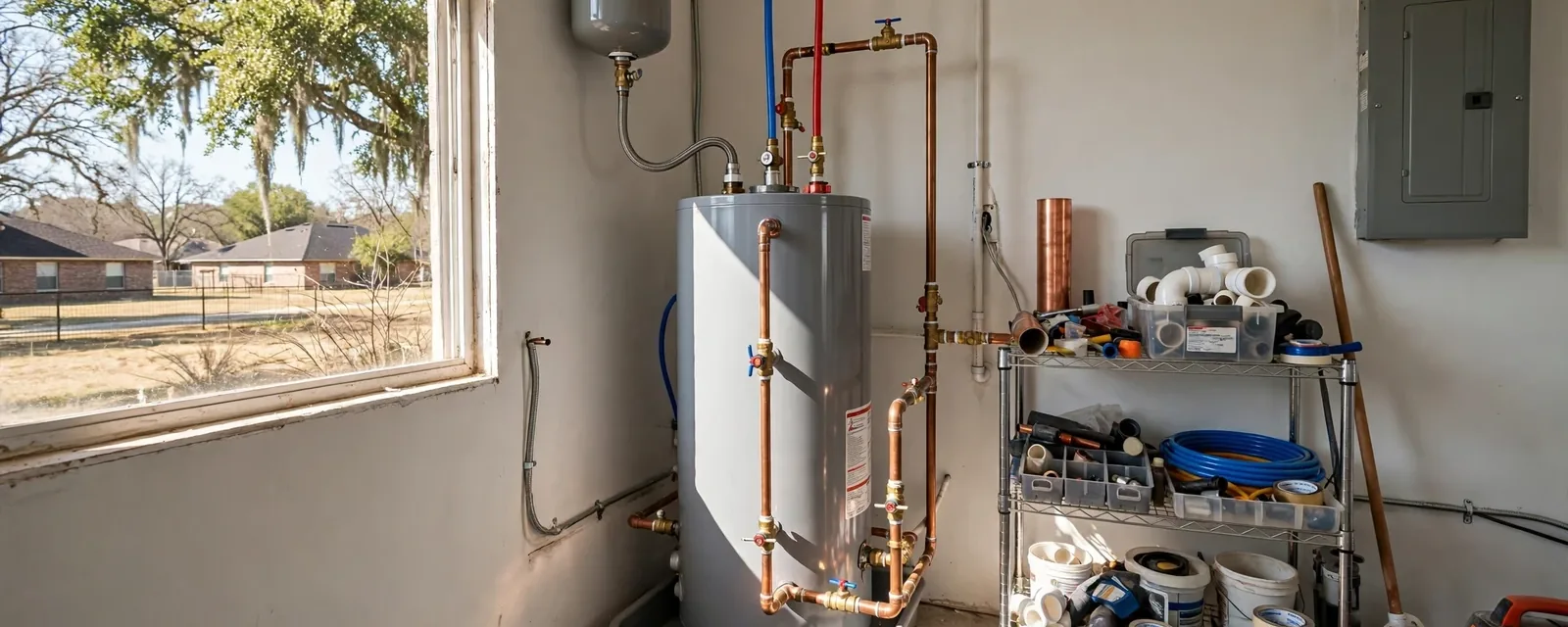
New water heater installation covers three situations: a new build or addition with no existing tank, a relocation to a different closet or garage wall, and a capacity upgrade when the old unit no longer keeps up. If the tank has already failed and water is on the floor, that is covered on our water heater replacement page. This page is for planned work.
A clean installation is a set of small decisions made correctly: the unit size, where it sits, how it vents, how it drains and how it is braced. Our plumber walks through these with you before the install, so the day of the work is a matter of doing rather than discovering.
Choosing size and fuel type
Sizing starts with how many people live in the home and when they use hot water. A household of two with one bathroom is well served by a 40 gallon tank, and a family of five with teenagers often needs 50 or 60 gallons or a high-recovery unit. Oversizing wastes energy through standby loss, and undersizing means cold showers during the morning rush.
Fuel type depends on what the house is already piped for. A home with natural gas can run a gas tank or a tankless unit. A home with only electric service can take a standard electric tank or a heat pump hybrid, which uses far less power but needs space and airflow.
Energy Trust of Oregon has offered incentives for efficient water heaters, so check what is current before you buy.
| Choice | Fits when | Watch for |
|---|---|---|
| Gas tank | Gas line already runs to the area | Vent path and clearances |
| Electric tank | No gas, or garage with no vent route | Breaker and wire capacity |
| Heat pump hybrid | Open room with airflow and a condensate drain | Cool air output and noise |
| Tankless gas | Space is tight and the gas line is large enough | Venting and gas pipe size |
What the installation includes
The plumber places the heater on a drain pan with a drain line routed to a safe location, then installs new shutoff valves and flexible connectors. A temperature and pressure relief valve with a full-size discharge pipe goes on every tank, and a thermal expansion tank is added where the water system is closed. Gas units get a sediment trap and a leak test of every joint.
Oregon is earthquake country, and the state plumbing code addresses bracing for water heaters. We strap tanks to the wall framing so a shaking house does not tip a full tank onto its supply lines. Venting is tested for draft, and electric units are connected to a correctly sized circuit by the person qualified to do that work.
Planning a new water heater?
Call to schedule an installation visit and get a clear price before any work starts.
Where the heater goes matters
Garages are common in Happy Valley homes, and a heater there needs protection from vehicle impact and a pan that drains away from the slab. Closets need combustion air for gas units. An attic or second-floor location adds weight and flood risk, so a drain pan and a leak alarm are worth the small cost.
If you are relocating, expect extra pipe, vent and gas work, and a plan to review before the day.
Permits and inspections
Water heater installation can need a plumbing permit, and rules vary by project, so ask the Happy Valley building department about your specific work. We can describe the scope in plain terms so the conversation is quick. If the job triggers an inspection, the plumber leaves the area ready for the inspector instead of buried behind stored boxes.
Price and scheduling
The price is stated before work begins and depends on unit type, access, vent changes, gas pipe size and any permit work. Planned installs are often scheduled within days, and same-day appointments are possible when the schedule allows.
If your heater is still working but old, booking an install before it fails costs less than an after-hours emergency, and it lets you pick the unit instead of taking what is on the truck.
After installation, set the temperature near 120 degrees, note the date of install and plan an annual flush. If you notice damp spots near the new unit later, our leak detection service can trace small drips before they spread.
Water heater installation questions
A like-for-like install usually takes a few hours. New gas lines, vent changes or relocation can extend the work to a full day, and the plumber will give you an estimate of the time before starting.
Yes. We run supply, drain, venting and gas or electric connections as needed. Coordinate with your builder so the framing and utilities are ready on the day.
Yes. We take the old unit and packaging with us. Tell us when you book if there is anything unusual about the site.
Pans are expected wherever a leak could damage finished floors or living space. We install a pan with a drain line, and we recommend one in nearly every situation.
Count the people, bathrooms and big hot water uses such as soaking tubs. The plumber sizes the unit with you so it matches real use, not just a rule of thumb.
Same-day appointments are available when the schedule allows. Call early and tell us the fuel type and tank size you want.