
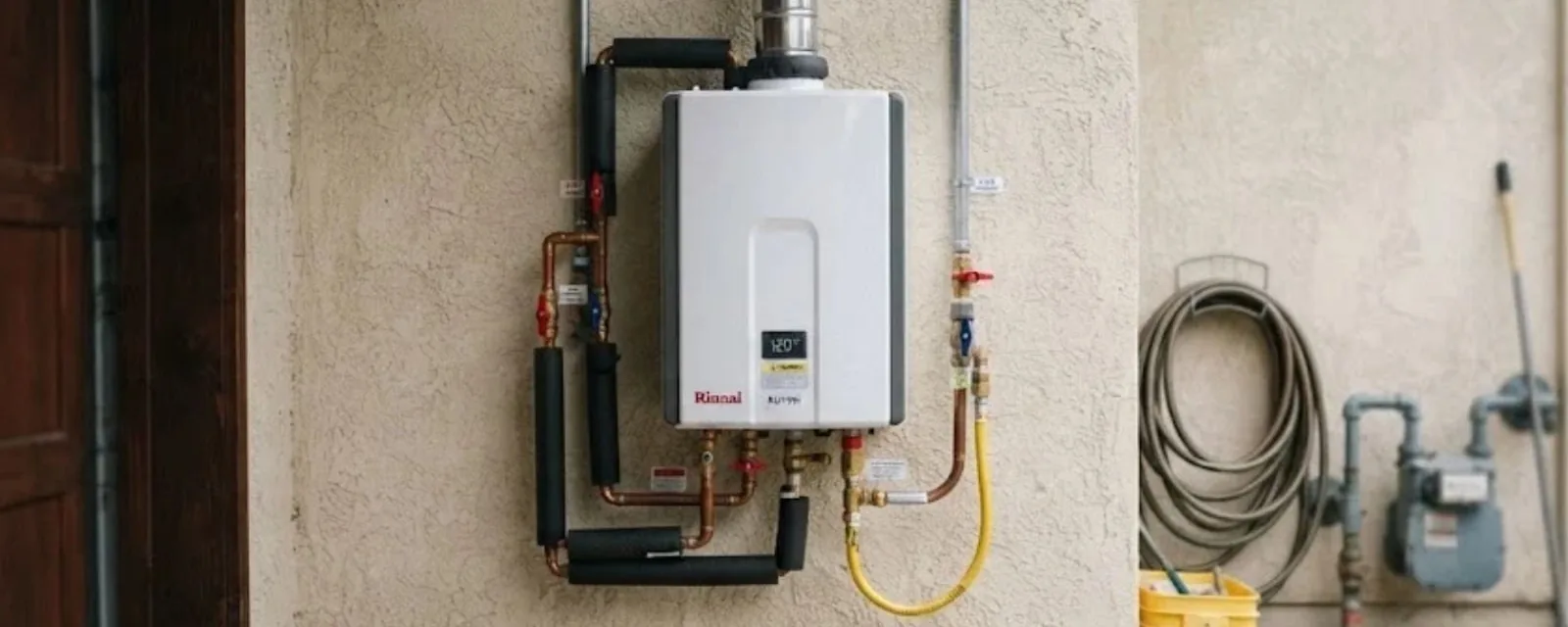
A tankless water heater heats water as it flows instead of storing it, so there is no tank to rust through and no standby heat loss. The catch is that the unit demands a lot of gas or electricity at once.
Before a conversion makes sense, someone has to check the gas pipe size, the vent route and whether the electrical panel can feed the unit. That check is the first step of every tankless visit we make.
If you already own a tankless unit and it is throwing an error code, producing lukewarm water or short cycling, the cause is often a clogged inlet filter, scale in the heat exchanger or a venting or condensate problem. These are fixable. The plumber reads the code, tests the flow and tells you what is wrong before replacing anything.
Is tankless right for your home?
Tankless units suit homes where space is limited, where hot water use is steady rather than clustered, and where the gas supply can handle the load. A single unit can struggle if two showers and a dishwasher run at once, and a large family may need a bigger unit or two. For a household that wants a lower profile and long service life, it is a strong option.
It is a weaker fit when the existing gas line is undersized, when the venting would need major reconstruction or when the household uses very little hot water and will not recover the higher purchase price. We will say that plainly, and we can point you to a standard water heater installation when a tank is the better value.
Questions to settle before you buy
- What is the gas pipe size and length from the meter to the heater location?
- Where will the vent terminate, and are clearances to windows and property lines met?
- Does the unit need a condensate drain, and where will it run?
- How many fixtures typically run at once, and what flow rate does that require?
Converting from a tank to tankless
A conversion changes more than the heater. The old tank vent is usually the wrong size or type for a tankless unit, a larger gas line may be needed, and a condensing model needs a drain for its acidic condensate. Electric tankless units draw a large current and may need a panel upgrade.
The plumber lists these items in the quote so you can see the full cost instead of just the unit price.
Thinking about tankless, or fighting an error code?
Call and a plumber will review your gas line, vent path and hot water use.
Service, flushing and descaling
Tankless units need annual maintenance. A flush with a pump and a descaling solution clears mineral film from the heat exchanger, and the inlet screen is cleaned so flow stays strong. Happy Valley water from Sunrise Water Authority is soft at about 1.2 grains per gallon, so scale builds slowly here compared with hard-water cities, but periodic flushing still protects the unit and keeps the warranty in good standing.
| Symptom | Likely cause | What we do |
|---|---|---|
| Error code on the display | Flame, vent or sensor fault | Read the code, test the part, repair |
| Lukewarm water at low flow | Scale or a failing sensor | Flush the heat exchanger, test sensors |
| Water goes cold intermittently | Flow below the minimum or crossover | Check fixtures and cross connections |
| Condensate backing up | Clogged drain or neutralizer | Clear the line, replace the neutralizer |
Costs and what changes them
The price covers the unit, venting, gas or electrical upgrades, condensate handling and labor. You hear the full price before work starts. Permit rules vary, so ask the Happy Valley building department about your project, and we can describe the work for that conversation. Maintenance visits cost far less than the repairs that come from skipping them.
If your current tank is failing right now, start with water heater replacement and plan the conversion once the emergency is over.
Tankless water heater questions
It can be, when space is tight, hot water use is steady and the gas line can support it. If your gas line or vent needs major work, a modern tank may cost less overall.
Once a year is a common recommendation, and your manufacturer's manual sets the exact schedule. Soft water slows scale, but flushing still clears film and protects the heat exchanger.
We work on common residential models. Tell us the make and model number when you call so the plumber arrives with the right information.
Short cold bursts can come from flow that dips below the minimum, a clogged inlet screen or a sensor issue. Testing the unit shows which one.
No hot water at all is urgent, and we answer around the clock. Routine flushing can be scheduled for a convenient day.
New venting, a gas line check or upgrade, a condensate drain for condensing models and possible electrical work. The plumber lists each item in your quote.