
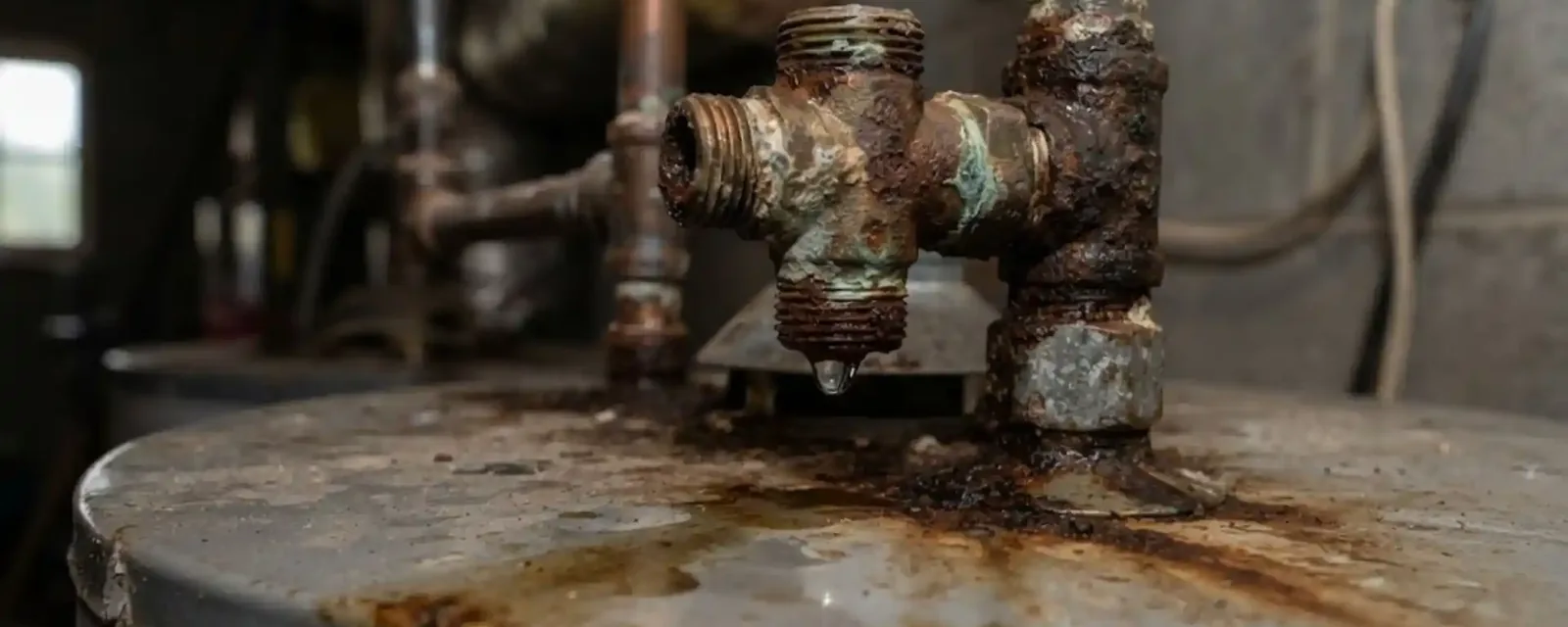
A water heater's temperature and pressure relief valve, usually called the T&P valve, exists to open if the tank gets too hot or the pressure climbs too high. If it is dripping, one of two things is happening: either it is doing its job because something in the system is out of range, or the valve itself has worn out.
Either way, it needs attention, and it must never be plugged or capped.
The valve sits near the top of the tank with a discharge pipe running down toward the floor. A slow, steady drip, a burst of water now and then or water on the floor under the pipe are the usual signs. Sometimes the drip stops after a few days and then returns, which is an important clue about the cause.
Why the valve is dripping
There are four common causes. High water pressure in the house pushes the valve open, which often happens in homes with a closed system and no working expansion tank. A thermostat that is set too high or has failed can overheat the tank. A worn seat, caused by age or mineral particles, leaks even when conditions are normal. And sediment on the seat can stop it from closing fully.
| Cause | Clue | Typical fix |
|---|---|---|
| Thermal expansion pressure | Drips when the heater runs, stops later | Install or replace the expansion tank |
| High street pressure | Drips constantly, faucets bang | Install or replace a pressure regulator |
| Overheated tank | Water scalding hot, steam at taps | Lower or replace the thermostat |
| Worn or dirty valve | Slow steady drip, normal pressure and temperature | Replace the valve |
Why you must never cap it
Some people plug the discharge pipe to stop the drip. That removes the only safeguard against a tank rupture. A water heater under uncontrolled heat and pressure can fail violently. The valve is a safety device, and plumbers treat a stuck or leaking one as a priority.
If water is coming from it right now and the tank feels very hot, turn off the gas control or the breaker and call.
What to do now
- Turn the heater's gas control to pilot or off, or switch off its breaker.
- Do not cap or plug the valve or its discharge pipe.
- Keep people away from the discharge line, since the water can be scalding.
- Check whether faucets bang or the pressure feels high.
Relief valve leaking or discharging?
Call and a plumber will test the valve and the water pressure and fix the cause.
How a plumber diagnoses it
The plumber measures the water pressure at an outdoor spigot with a gauge, checks the thermostat settings and the water temperature at the tap, and looks at the expansion tank. A dripping valve on a system with normal pressure and a working expansion tank is likely worn. A dripping valve on a system with pressure over about 80 psi points at the regulator or the street supply instead.
Replacing the valve is a quick job when it is the cause. The old valve is removed, the new valve is fitted with the correct pressure and temperature rating and the discharge pipe is checked for size and routing. The pipe should end near the floor or outside, never be threaded or capped and not run uphill.
If the tank is old and rusted at the fittings, replacement of the tank may be the better value, which is where water heater replacement comes in.
Expansion tanks and closed systems
Heating water makes it expand. In an open system, the extra volume pushes back into the street main. Many homes now have a check valve or a pressure regulator that blocks backflow, which makes the system closed, so the expansion has nowhere to go. A small thermal expansion tank on the cold line absorbs it.
An expansion tank that has lost its air charge, which happens with age, lets pressure spike every cycle and makes the relief valve weep. Testing it takes a minute with a gauge.
Happy Valley note: pressure on the slopes
Happy Valley sits on the southeast flank of Mount Scott, and neighborhoods near Scouters Mountain climb and drop quickly. Elevation changes static pressure, and homes at the bottom of a slope can see higher pressure than the top. If your relief valve drips, faucets bang or fixtures wear quickly, check the pressure at an outdoor spigot before replacing parts.
Sunrise Water Authority, which serves the city, is responsible for the system up to the meter, and the pressure regulator on your side is yours to maintain.
When to replace the valve and when to replace the tank
A new valve on a sound heater is worth the repair. On a tank that is old, rusted or leaking from other places, it is not. If the heater is past about a dozen years or shows corrosion around the fittings, ask the plumber to price both options. Our water heater repair page covers the diagnostic steps.
If you live in Milwaukie or Oregon City, older homes may also have thermal expansion issues that were never addressed.
Testing the valve safely
Manufacturers often advise lifting the valve's test lever briefly once a year to confirm it opens and reseats. Because the discharge can be scalding, keep your hands, face and pets clear of the discharge line, and consider having a plumber do it during an annual visit.
If the valve does not release water when tested, does not reseat or drips afterward, it should be replaced. Do not rely on a valve that has never been exercised in years, since mineral deposits can freeze it in place.
Warning signs to watch between visits
Check the floor under the discharge pipe now and then. A wet floor, mineral crust at the pipe end or a hissing sound from the valve are all early warnings. Note whether dripping coincides with the heater running, which points to thermal expansion, or happens all day, which points to pressure or a worn valve. That detail speeds up the plumber's diagnosis.
Code reference
Relief valves and their discharge pipes are covered by the Oregon Plumbing Specialty Code (OPSC), based on the Uniform Plumbing Code (UPC). Do not cap or plug a relief valve, because it is the heater's last safety device.
Relief valve questions
No. A relief valve should stay closed during normal operation. A drip means pressure or temperature is out of range or the valve is worn.
The work involves draining the tank and correct fitting selection. A licensed plumber can do it safely and confirm the pressure and expansion tank are in good order.
Residential pressure above about 80 psi is generally considered high. A plumber measures it with a gauge and can install a regulator if needed.
Pressure varies with elevation, and homes at lower points on the slopes near Mount Scott can see higher pressure. Test at an outdoor spigot to check.
Never. The discharge pipe must stay open so the valve can release water safely if the tank overheats.