
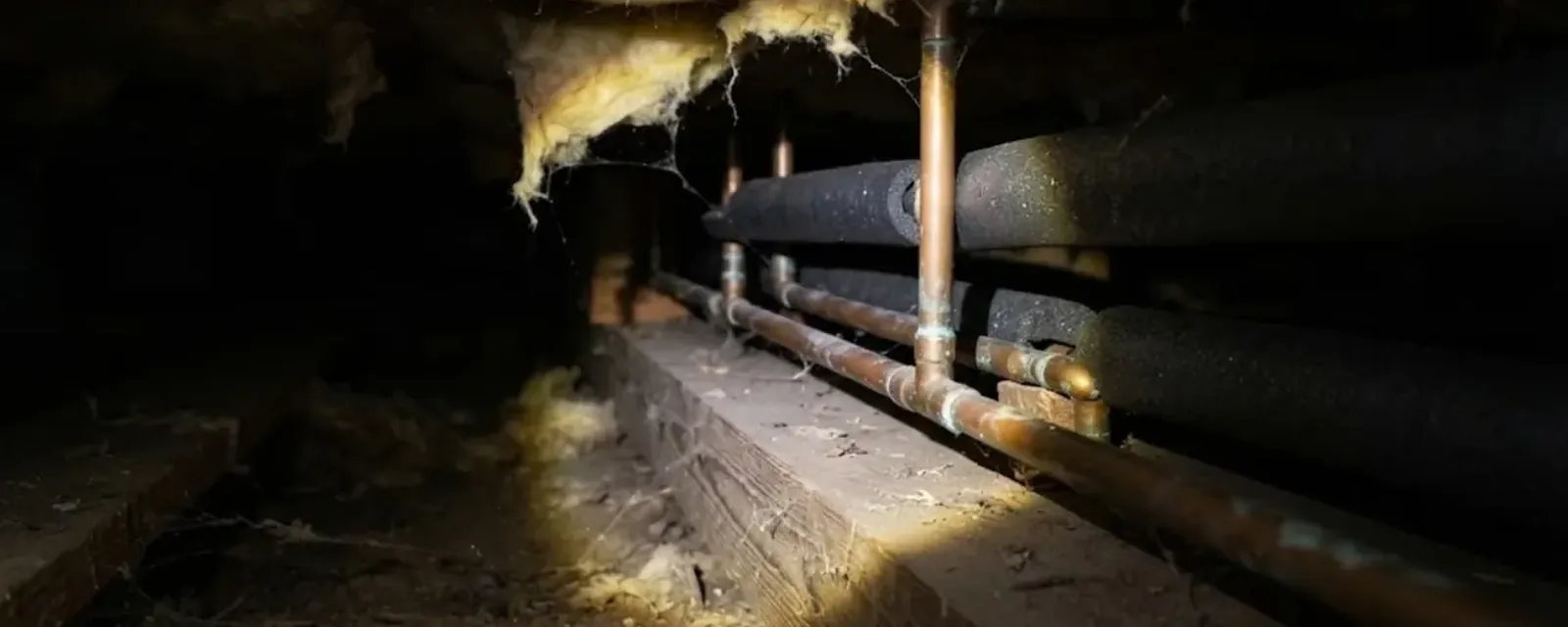
A leak in a crawlspace can run for months without any sign upstairs. Water drips onto soil or insulation, soaks wood, feeds mold and rusts metal. By the time floors feel soft or a smell reaches the living space, the damage is well along. The earlier signs are subtler: a rising water bill, a meter that moves with everything off, a musty odor and humidity that stays high.
Crawlspaces also hold moisture that has nothing to do with pipes. Groundwater, poor drainage and missing vapor barriers all add dampness, so finding the source means separating a plumbing leak from ordinary moisture.
Signs that point to a leak
Look for a water meter that moves with all taps off, damp or sagging insulation, rust on hangers and straps, drip marks on soil, standing water and a persistent musty smell. Upstairs, watch for warped flooring, soft spots, stains on the ceiling of a lower level and a bill that has risen without an explanation. Sounds of running water at night are another clue.
| Sign | What it suggests |
|---|---|
| Meter moves with all water off | Active leak somewhere in the system |
| Wet or sagging insulation | Leak above, or high humidity |
| Rust on straps and hangers | Long-term moisture or leak |
| Warped or soft flooring | Water has been present for some time |
| Musty smell upstairs | Moisture or mold in the crawlspace |
Checking safely
Crawlspaces have hazards: low clearance, sharp objects, electrical wiring, insects and rodents. If you go in, wear gloves, a mask, knee protection and a bright light, and tell someone where you are. Do not enter a crawlspace with standing water near electrical wiring.
Look for drips, wet spots and stains along the pipes, but do not disturb insulation that may contain irritants. If conditions look unsafe, let a plumber make the first inspection.
Before you go in
- Turn off power to the crawlspace circuit if you see standing water near wiring.
- Wear gloves, a respirator-style mask and knee pads, and carry a strong light.
- Do not touch wires or damaged insulation.
- Photograph what you see, and note the meter reading before and after.
Suspect a crawlspace leak?
Call and a plumber will find the source and tell you the repair price before starting.
What plumbers look for
The plumber scans along every pipe, fitting and connection, checks supply lines, shutoff valves, the water heater if it sits there, drain connections and condensation on cold lines. Thermal imaging and acoustic listening can locate a leak without moving much insulation. The plumber also checks the pressure, because high pressure stresses fittings. The scan ends with a pressure test of the suspected section. Our leak detection page explains the tools.
Common causes in crawlspaces
Fitting failures in PEX and CPVC systems, punctures where a nail or screw went through a line during construction or a remodel, corroded copper or galvanized pipe, failed shutoff valves and dripping drain connections are typical. A water heater located in a crawlspace adds another potential source. Cold pipes can also sweat in humid air and drip, which looks like a leak but is condensation.
Fixes and prevention
A fitting leak is repaired by replacing the fitting. A damaged section is cut out and replaced. Insulating cold and hot lines reduces condensation and helps prevent freezing. A vapor barrier on the soil reduces ground moisture. Keeping crawlspace vents and access in good order helps with ventilation. If the pipe is old and failing in several places, a partial repiping may be better value than a series of repairs.
Happy Valley note: wet seasons and freezes
Happy Valley sits on the southeast flank of Mount Scott, and western Oregon's rainy season keeps soil damp for much of the year, so crawlspaces here collect moisture from the ground as well as from pipes. Cold snaps arrive in some winters, and pipes in unheated crawlspaces and exterior walls are where freezing happens.
A burst pipe in a crawlspace is the kind of failure our burst pipe repair page covers. Sunrise Water Authority, which serves the city, is responsible up to the meter, and your crawlspace plumbing is yours to maintain.
What to do now
If you suspect a leak, do the meter test, close the main if it moves and call. Photograph what you can. Avoid long-term fixes like sealing a leak with putty, which only hides the problem. In Clackamas and Milwaukie, where crawlspaces under older homes are common, a periodic look by a plumber is a sensible habit.
What to tell the plumber when you call
The more detail you share up front, the faster a leak search goes. Describe when you first noticed a sign, whether the water meter moved during your test and where in the house you see staining or smell dampness. Mention past plumbing work under the house, including any remodel, since a screw or nail through a line during that work is a classic hidden cause.
On arrival, the plumber checks the access hatch, looks over the space for hazards and sets up protective gear. Scanning follows the pipe runs from the point where the supply enters the home, so tell us where the main valve and water heater are. If you have a vapor barrier, note whether it is intact, because torn sheeting lets ground moisture rise and confuses the search.
After the repair, ask what follow-up the space needs. Wet insulation usually has to be removed and replaced, standing moisture may need ventilation or drying, and a vapor barrier that was disturbed should be put back. These steps belong to other trades, and a plumber can describe what to ask them for.
Seasonal checks that catch problems early
Look under the house twice a year, once before the wet season and once before the first cold snap. Check that insulation is dry and in place, that pipe hangers are tight and that no line sags. Confirm the access hatch seals well, because open gaps invite pests and cold air. A short checklist and a few photos each visit give you a record to compare against when something changes.
Code reference
Crawlspace pipe supports, insulation and access follow the Oregon Plumbing Specialty Code (OPSC), based on the Uniform Plumbing Code (UPC). Work in a crawlspace carries hazards such as wet insulation and poor air, so wear a mask and tell someone before you go in.
Crawlspace leak questions
A water meter that moves with all taps off points to a pipe leak. Constant dampness with a still meter points to groundwater or poor ventilation.
It can be, with precautions. Avoid standing water near wiring, wear protection and let a plumber inspect if conditions look unsafe.
Yes, in cold snaps, especially pipes near vents or exterior walls. Insulation and keeping the home heated help.
A plumber repairs the pipe. Drying, insulation and moisture control are separate tasks that may need other contractors.
Yes, if water is escaping continuously. A rising bill with no visible leak is a common first sign.